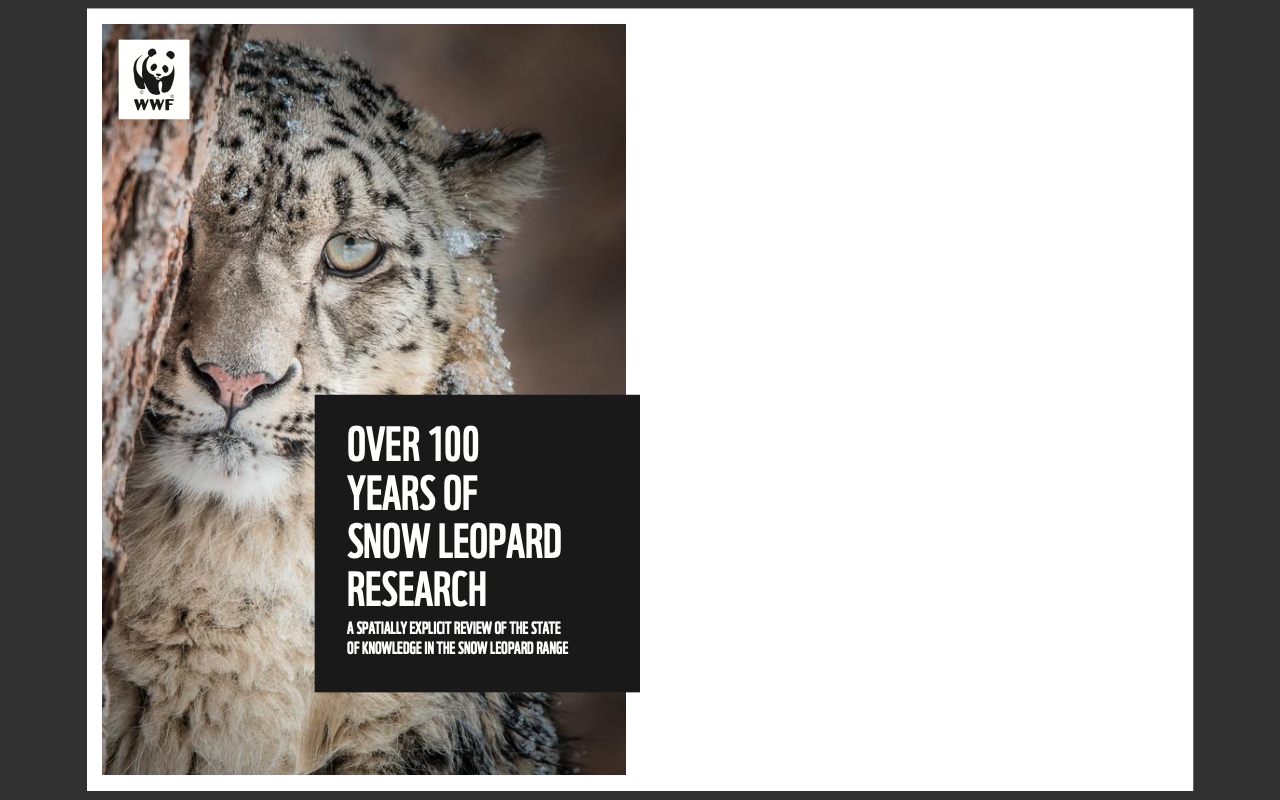
Please find details of a new Technical Report that has been added to our Bibliography.

Title: Over 100 Years of Snow Leopard Research: A Spatially Explicit Review of the
State of Knowledge in the Snow Leopard Range.

 
Authors: Sharma, R. K., Singh, R.  
 

Executive Summary:  Evolved to live in some of the world’s highest and harshest habitats, the elusive and rare snow leopards (Panthera uncia) are undisputed icons of High Asia. Across their distributional range in Central and South Asia, the snow leopard’s habitat spans diverse landscapes, with livestock herding being the most dominant form of land use. As a result, areas inhabited by snow leopards and people often overlap, creating challenges as well as opportunities for their conservation.Snow leopard conservation has received increasing attention in the past two decades and global interest in protecting this unique high-mountain cat continues to rise. However, effective and efficient snow leopard conservation initiativesrequire multi-dimensional research and collaboration among a diverse array of actors. National governments in snow leopard range, for instance, have repeatedly pledged their support for the conservation of the animal and the breathtaking landscapes they inhabit. These landscapes house an array of unique high-altitude wildlife and provide homes and life-sustaining natural resources to hundreds of millions of people. The mountains of High Asia also form the headwaters of 20 major river basins, an important water source for 22 countries (Sindorf et al., 2014). More than 2 billion people live in these basins which overlap the snow leopard range.

Given the growing interest in and commitment towards conservation of snow leopards and their habitats, it is crucial to examine the depth and breadth of knowledge currently available to inform conservation efforts and identify gaps in that knowledge. We reviewed over 100 years of published research on snow leopards to examine its temporal and spatial trends across an array of thematic areas.

Snow leopard research intensified in the 1970s and studies on snow leopards have continued to increase exponentially since then. However, just four hotspots of snow leopard research (sites with continued multi-year research) have emerged, with less than 23% of the snow leopard range being researched. Nepal, India and China have conducted the most snow leopard research, followed by Mongolia and Pakistan. Our analysis revealed that

snow leopard research was highly focussed on ecological research followed by studies on human-wildlife conflict. Most ecological studies focused on estimating the number and distribution of snow leopards and prey species. However, conservationists have surveyed less than 3% of the snow leopard range using rigorous and scientifically acceptable abundance estimation approaches. The lack of attention to the human dimensions of conservation was particularly stark, especially given that the majority of the snow leopard range is inhabited by local communities dependent on livestock herding. More importantly, very few studies evaluated the effectiveness of conservation actions. A lack of evidence demonstrating and quantifying the impacts of conservation interventions is a significant knowledge gap in snow leopard research.

In this review, we identify and suggest the high-priority research necessary for effective conservation planning for snow leopards and their multiple-use habitat in High Asia.  

URL: https://snowleopardnetwork.org/bibliography/Report_Over_100_Years_of_Snow_Leopard_Research.pdf
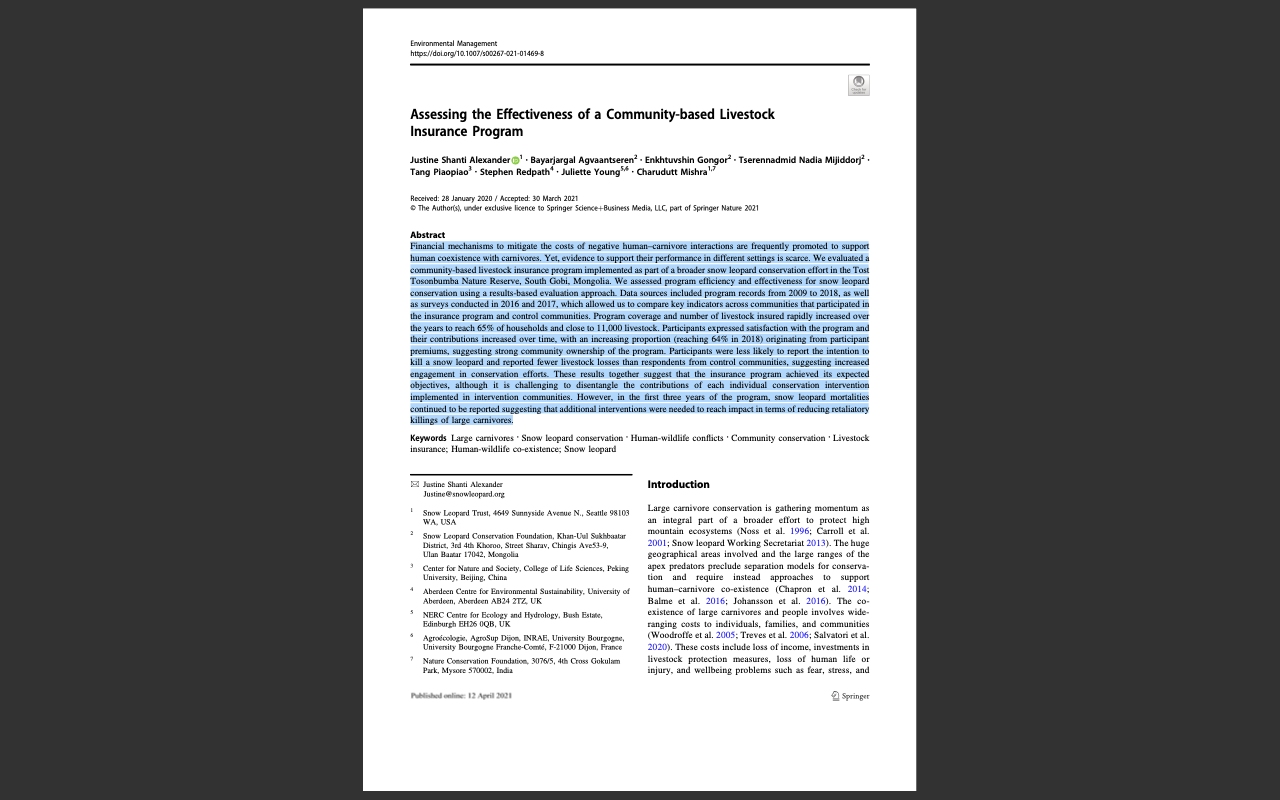
 

Please find details below, of two new articles added to the Bibliography:

Title: Assessing the Effectiveness of a Community-based Livestock Insurance Program

Authors: Alexander, J. S., Agvaantseren, B., Gongor, E., Mijiddorj, T. N., Piaopiao, T., Stephen Redpath, S., Young, J., Mishra, C.

 
Abstract:  Financial mechanisms to mitigate the costs of negative human–carnivore interactions are frequently promoted to support human coexistence with carnivores. Yet, evidence to support their performance in different settings is scarce. We evaluated a community-based livestock insurance program implemented as part of a broader snow leopard conservation effort in the Tost Tosonbumba Nature Reserve, South Gobi, Mongolia. We assessed program ef!ciency and effectiveness for snow leopard conservation using a results-based evaluation approach. Data sources included program records from 2009 to 2018, as well as surveys conducted in 2016 and 2017, which allowed us to compare key indicators across communities that participated in the insurance program and control communities. Program coverage and number of livestock insured rapidly increased over the years to reach 65% of households and close to 11,000 livestock. Participants expressed satisfaction with the program and their contributions increased over time, with an increasing proportion (reaching 64% in 2018) originating from participant premiums, suggesting strong community ownership of the program. Participants were less likely to report the intention to kill a snow leopard and reported fewer livestock losses than respondents from control communities, suggesting increased engagement in conservation efforts. These results together suggest that the insurance program achieved its expected objectives, although it is challenging to disentangle the contributions of each individual conservation intervention implemented in intervention communities. However, in the !rst three years of the program, snow leopard mortalities continued to be reported suggesting that additional interventions were needed to reach impact in terms of reducing retaliatory killings of large carnivores.

URL

Title:  Spatial variation in population-density of snow leopards in a multiple use landscape in Spiti Valley, Trans-Himalaya
 
Authors: Sharma, R. K., Sharma, K., Borchers, D., Bhatnagar, Y V., Suryawanshi, K. R., Mishra, C. 

Abstract:  The endangered snow leopard Panthera uncia occurs in human use landscapes in the mountains of South and Central Asia. Conservationists generally agree that snow leopards must be conserved through a land-sharing approach, rather than land-sparing in the form of strictly protected areas. Effective conservation through land-sharing requires a good understanding of how snow leopards respond to human use of the landscape. Snow leopard density is expected to show spatial variation within a landscape because of variation in the intensity of human use and the quality of habitat. However, snow leopards have been difficult to enumerate and monitor. Variation in the density of snow leopards remains undocumented, and the impact of human use on their populations is poorly understood. We examined spatial variation in snow leopard density in Spiti Valley, an important snow leopard landscape in India, via spatially explicit capture-recapture analysis of camera trap data. We camera trapped an area encompassing a minimum convex polygon of 953 km2. Our best model estimated an overall density of 0.5 (95% CI: 0.31–0.82) mature snow leopards per 100 km2. Using AIC, our best model showed the density of snow leopards to depend on estimated wild prey density, movement about activity centres to depend on altitude, and the expected number of encounters at the activity centre to depend on topography. Models that also used livestock biomass as a density covariate ranked second, but the effect of livestock was weak. Our results highlight the importance of maintaining high density pockets of wild prey populations in multiple-use landscapes to enhance snow leopard conservation.

URL 

Research on or about the snow leopard dates back at least 100 years. It began to intensify in the 1970s and has continued to grow rapidly in the last 10 years. The Snow Leopard Network is pleased to invite to our forthcoming webinar – WWF’s snow leopard specialist Rishi Sharma and fellow author Rashmi Singh. Together they carried out a detailed review of snow leopard published research drawing on Google Scholar and the Snow Leopard Network’s bibliography archive. The presenters will highlight the main directions of thinking which shaped what research and conservation was undertaken over the different periods. They end with a number of questions that researchers and conservationist still face today as we look ahead into the future. 

Do join us for this very interesting applied look back at snow leopard research history and an opportunity to contribute to a lively discussion on the way ahead.

About the Webinar

The presenters – Rishi Sharma and Rashmi Singh have undertaken a review of all published research on snow leopards between 1904 and 2020. The goal was to examine the current state of knowledge across the snow leopard range while identifying spatial and temporal gaps. The findings are striking – bringing together the latest published information. Importantly the presenters will highlight the key gaps in our knowledge which may hamper effective conservation planning and action on the ground. The presenters set out seven key priorities for snow leopard research and conservation. Following the presentation we will open the floor for questions and discussion on snow leopard research priorities for the coming decade(s). 

About our Guests

Dr. Rishi Kumar Sharma. Born and brought up in a tiny village in the Himalayan foothills, Rishi is fascinated by all things concerning mountains. Rishi has a Master’s degree in Wildlife Science from the Wildlife Institute of India and a PhD in Ecology with a dissertation on snow leopards titled “A multi-scale study of habitat use and abundance of the endangered Snow Leopard “Panthera uncia“. Rishi has 15 years of experience in large carnivore research and conservation primarily tigers and snow leopards. He is currently the Science & Policy Lead for WWF’s Snow Leopard Conservation Program. He is passionate about finding solutions to conservation problems in High Asia by blending ecology, social sciences and the traditional community wisdom. His primary interests include carnivore ecology, animal behaviour, conservation biology and human dimensions of conservation.

Rashmi Singh is a PhD Scholar at the School of Human Ecology, Ambedkar University and Associate Editor for Pastoralism– research, policy and practice Journal. Her PhD work explores the politics of rangeland conservation in the Himalaya using an interdisciplinary approach. Her primary interest areas include research in the disciplines of pastoral studies, rangeland conservation and animal geography. Her ongoing research has highlighted the importance of including pastoralists in the policy formulation, conservation, and management of rangelands. She got interested in the fascinating world of snow leopards due to spirited discussion on “human snow leopard relationships” with Rishi, her partner. She is particularly interested in understanding the social dimension of Snow leopard conservation. She is intrigued by pastoral indigenous knowledge system and believes that long term regional studies are crucial for reconciling pastoral livelihood and rangeland conservation goals.


Ravneesh Singh/WWF-India

Date/Time

Tuesday, June 8th, 2021; 17:00- 18:00 India time

Location

ZOOM, to join this talk,   REGISTER HERE

Please note

  • If you have never used Zoom before, we recommend that you try the link 10 minutes before the start of the lecture.
  • Please feel free to write questions in the comment area and there will be time for questions/discussion at the end of the talk.
  • Please note that the session will be recorded and later featured on the SLN website. If you have concerns about this please let us know before the session. 

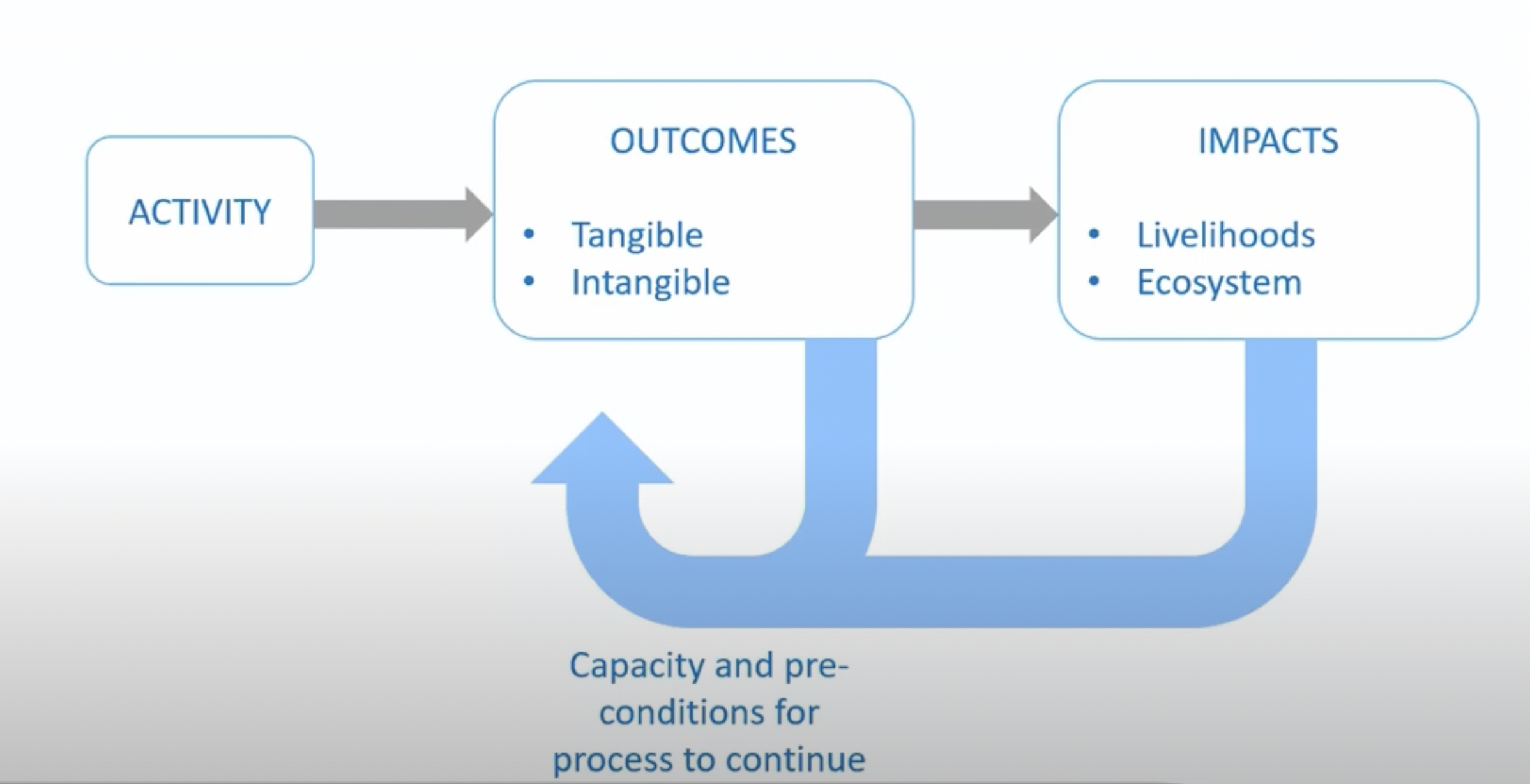
Welcome to Module 11! In this Session we focus on introducing principles of monitoring and evaluation and how it can support community conservation programs. We cover core terms, principles and approaches to M&E that are important foundations of conservation program planning and implementation. 

Session 1.1: Introduction

Session 1.2: Partners Principles for community conservation

Session 1.3: M&E Change is complex

Session 1.4: M&E understanding your context and contribution to change

SLN welcomes its Steering Committee member Orjan Johansson who introduces a recent publication on the scope of potential mis-identifications errors in camera trap data processing. He also shares the latest thinking on investigating this challenge further.

Orjan is joined by Abinand Reddy, David Borchers, Justine Shanti Alexander, Koustubh Sharma, Manvi Sharma and Paul van Dam-Bates as Panelists. Each panelist share their experiences and insights on snow leopard camera trapping and the tools that are being developed to address concerns with individual identification. We hope that this workshop will help share good practices and recommendations for improving individual identification.  

This Webinar is offered thanks to GSLEP‘s support. Find out more about the Workshop and the Speakers HERE.

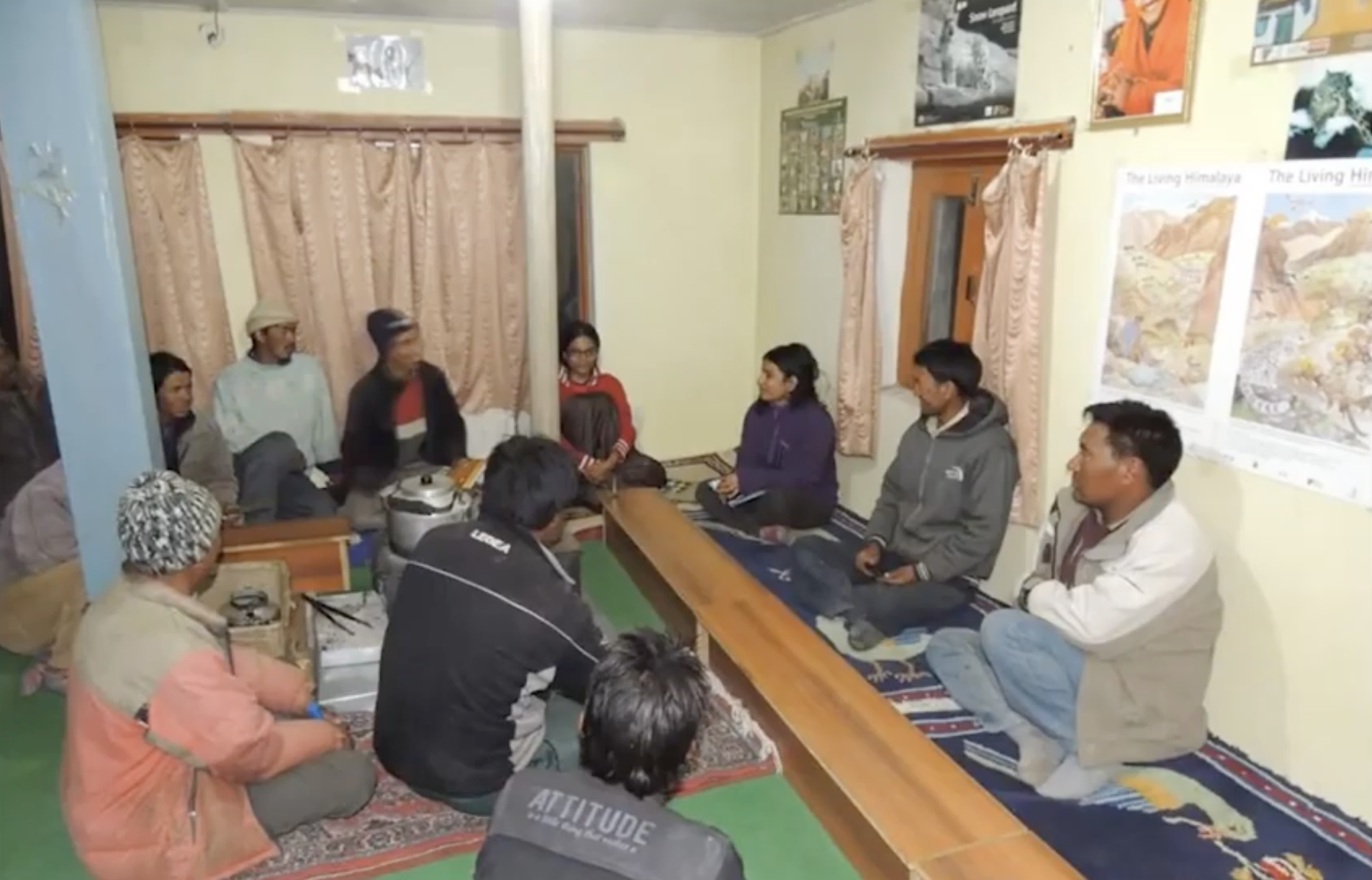
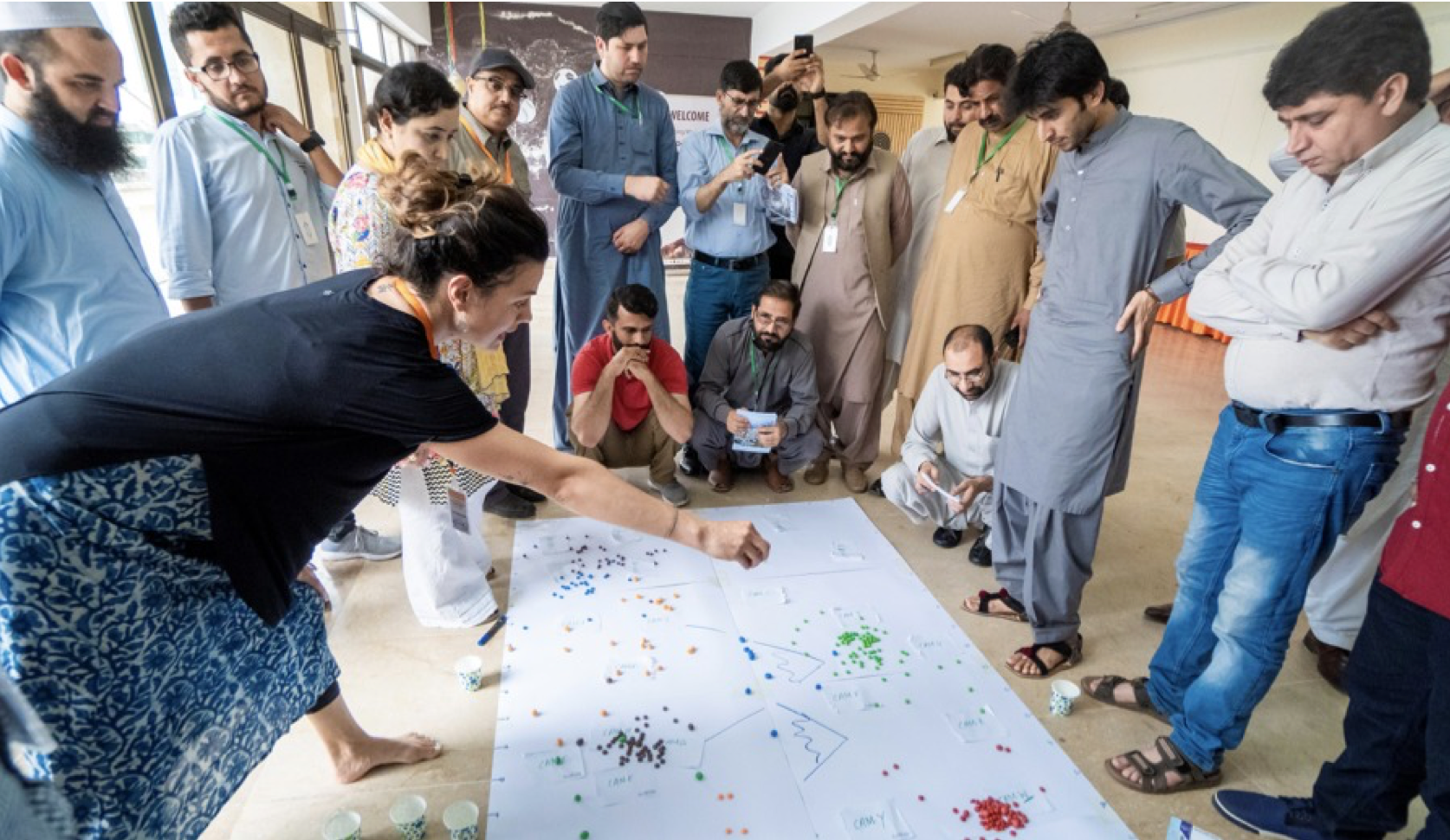
This Session explores participatory approaches to Monitoring! We use a case study from Spiti, India to illustrate how programs evolve and can monitor key outputs and outcomes.
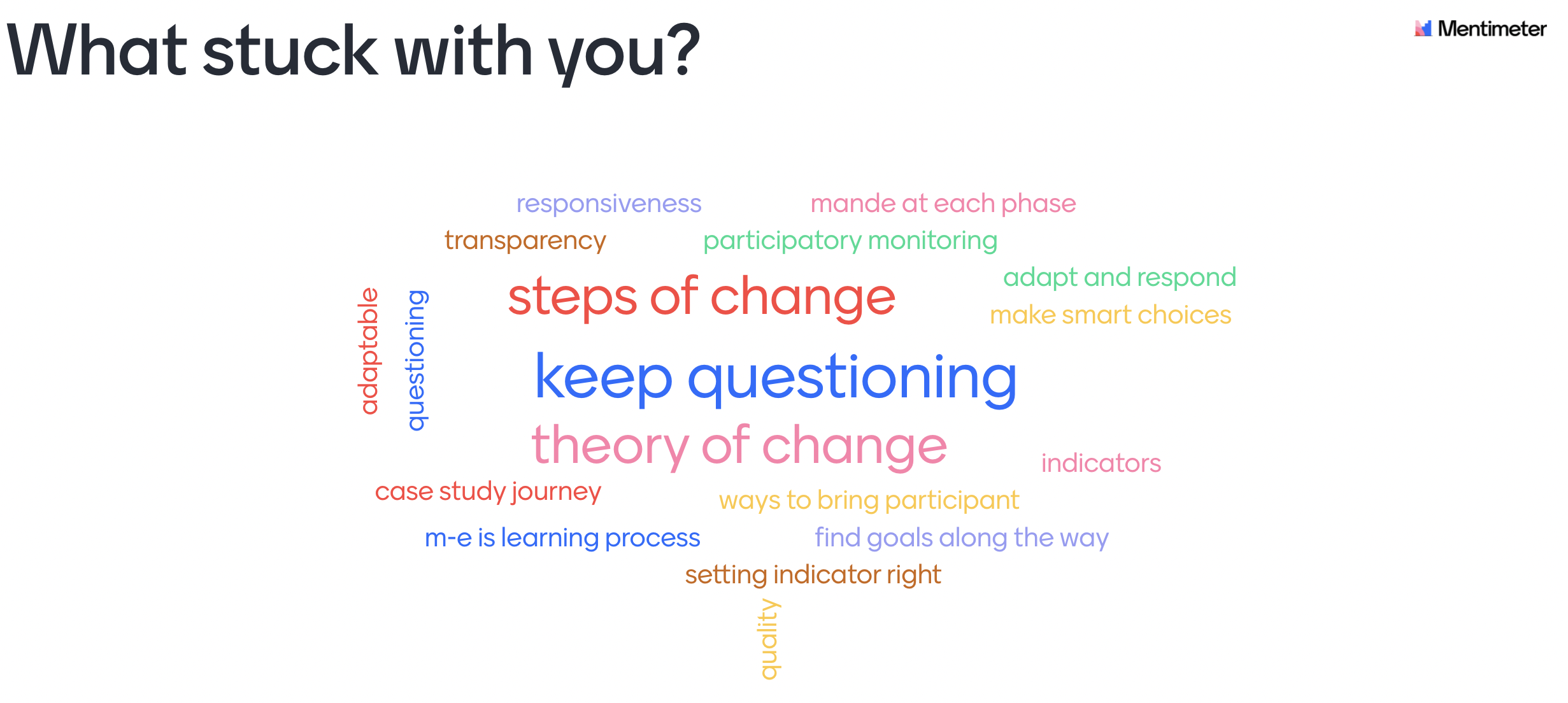
Checkout what key principles stuck with participants.

Session 2.1: Introduction to Participatory Monitoring

Session 2.2: Shen Case Study

Session 2.3: Introduction to monitoring

Session 2.4: Shen as an example of Participatory Monitoring

James shares two case studies related to evaluating conflict and climate change adaptation strategies. Through these case studies we explore relevant indicators/approaches to assess progress towards the harder to measure longer outcomes (such as resilience, adaptation, etc.) through stakeholder participatory approaches.  

As preparation for the session please feel free to check out this video related to Climate Adaptation Strategies for Rural Livelihoods in Indonesia. James will be sharing insights on how the team evaluated progress in their programs. Please also read the following three publications that share more details on these case studies and the approaches. 

Session 3.1: Background to conservation conflict MEL

Session 3.2: Discussion on indicators

Session 3.3: Feedback and final discussion


About the course

A good working knowledge of statistics can help you achieve better study designs, choose the correct analytical framework, and present your results in a meaningful way. In conservation, statistics is crucial for making decisions and predictions based on data. Module 12 aims to provide an understanding of fundamental statistical tools, and how to implement them in the widely used R software. All sessions include practical exercises that will help you become familiar with the R language.

    • Session 1

All statistical endeavours start with data. In this session, you will learn how to import your data into the R environment. This will be the perfect opportunity for you to become familiar with the R language, as well as with its basic commands. You will learn about data types most commonly used by ecologists, and the basics of descriptive statistics.

    • Session 2

In this session, we explore in more details the fundamentals of statistical theory. Using built-in datasets in R, you will learn how to identify methods that are most appropriate depending on the data you are working with, as well as essential principles of hypothesis testing.

    • Session 3

Using what we learned in the previous two sessions, we will work through all essential steps involved in data analysis, with a focus on linear regression. This includes the formulation of a hypothesis, data preparation and visualisation, statistical testing, and finally, results interpretation. We will complete two full practical exercises in R using built-in datasets. At the end of this session, you will be split into different groups in order to carry out one final analysis, which will be presented the week after.

    • Session 4

This session will start with presentation of results from the last analysis (see Session 3). The rest of the session will be dedicated to identifying and avoiding common mistakes in data analysis. This will allow us to also discuss issues related to results interpretation, which is essential in the field of conservation science when results may directly inform conservation planning.

Skills you will gain

    • How to organise your data
    • Hypothesis testing
    • Linear regression
    • Interpretation of results
    • How to avoid common mistakes

Meet the Resource Team

Anne Heloise Theo is a marine ecologist working on community ecology and behaviour of reef fish. She is currently a PhD student in the Centre for Ecological Sciences, Indian Institute of Science.

Guillaume Demare is a PhD candidate at the Museum für Naturkunde Berlin, Germany. His research currently focuses on the community ecology of West African amphibians.

Date/Time

  • Thursdays June 3rd, 10th, 17th, 24th 2021
  • 14:00-16:30 Bishkek time (2.5 hour)

Criteria for participation

  • Snow Leopard Network Member
  • Confirmed availability to attend all the four online seminars of a given module
  • Number of participants is limited to 25

Planned Schedule

  • 2.5 hour online Zoom Seminars take place Thursday of the month, June 2021 at 14:00 Bishkek, Kyrgyzstan time.
  • Additional group work, assignments or readings are likely to be organized by the trainers
  • Please note we expect all participants to attend the complete set of Thursday Seminars as they are interconnected and build on each other
  • Details of each specific Seminar topic will be shared approximately 5 days beforehand; including any expected preparations by participants.
  • Please note that all sessions are recorded and then made available online through the SLN youtube channel. By participating in these online sessions you automatically agree to authorise recording of audio and visual content presented during the live event and consent to subsequent use of the recording in the public domain by SLN. If you have any concerns please contact us. 

Deadline for Applications

  • May 26th, 2021. Please note places are limited so please do
    not delay in applying.
  • Applications Closed


Please find details of a new note reporting a SL predation on an adult yak, which has been added to our bibliography:

Title: Snow leopard (Panthera uncia) predation and consumption of an adult yak in the Mongolian Altai.

Authors: ???? ?????Krofel, M., Groff, C., Oberosler, V., Augugliaro, C., Rovero, F.

Introduction: The snow leopard (Panthera uncia) is an apex predator of mountainous ecosystems in Central Asia, characterised by relatively long feeding times and low kill rates (Johansson et al. 2015; Mallon et al. 2016). Predation is mainly focused on wild ungulates and the vast majority of animals killed by snow leopards are smaller than 100 kg (Lovari et al. 2013). Throughout most of their range, Siberian ibex (Capra sibirica), blue sheep (Pseudois nayaur), and argali (Ovis ammon) represent the most important prey (Hunter 2015). These species weigh up to 180 kg, which was suggested to be near the maximum limit of the prey size that snow leopard can handle (i.e. about 3 times its size) (e.g. Schaller 1977; Hunter 2015). Accordingly, researchers generally assume that prey like adult yaks (Bos grunniens) with an average body weight of 250 kg (Bagchi & Mishra 2006), are too large to be killed by snow leopards (e.g. Devkota et al. 2013; Chetri et al. 2017). In contrast, local livestock herders report that snow leopard can also kill larger prey, including adult yaks (e.g. Li et al. 2013; Suryawanshi et al. 2013), but confirmed records of snow leopard killing prey of this size appear to be lacking in the literature. We also have very limited knowledge about the consumption of snow leopard kills, and the scavengers, including conspecifics, that are using them (Fox & Chundawat 2016; Schaller 2016). Here we report on a predation event and the following consumption process of a snow leopard kill, a free-roaming adult female yak, which we studied in 2019 using snow tracking, direct observation and camera trapping in the Mongolian Altai.

URL: https://snowleopardnetwork.org/bibliography/Krofel_et_al_2021.pdf